Reference · Winning the arguments
Cycling evidence: research on health, risk, helmets and street design
Updated
You wait at the junction while three lanes of motor traffic roar past. A painted lane fades to nothing exactly where the road narrows and the tarmac breaks apart. When the local authority proposes changes to a junction like this, the phrase cycling evidence is tossed across the table by both sides. Residents want data to prove a track is needed. Opponents demand proof that anyone will actually use it. Planners sit in the middle wanting statistics that justify the capital budget. This page collects the evidence that comes up most often, with its source and its limits.
Where the phrase comes from
Go back to spring 2012 and a seminar in Birmingham called Cycling, Safety and Health: Winning the Arguments. The federation brought together speakers to lay out the facts systematically. Professor Bruce Lynn talked about physiological health, Dr Peter Ward covered helmets, and David Dansky spoke on cycle training. Malcolm Wardlaw looked at risk, while Martin Porter QC explained the intricacies of contributory negligence.
The goal was to equip people with facts, not just a sense of grievance. At that time, asking for a safe junction or an unbroken route felt like begging the council for a favour. By organising the data across medical, legal and statistical fields, the Birmingham seminar formalised a way of arguing for better streets.
Health: what the big studies found
The cycling health benefits evidence comes down to two major pieces of research that separated riding a bike from general leisure activity. In June 2000, Andersen and colleagues published an observational study in the Archives of Internal Medicine based on a vast Copenhagen cohort. They tracked 13,375 women and 17,265 men aged between 20 and 93. They found that cycling to work was associated with about a 40 per cent lower mortality rate, even after adjusting for their other leisure time physical activity. The sample size was impossible to ignore.
In April 2017, the British Medical Journal published a paper by Celis-Morales and others. They looked at 263,450 working adults from the UK Biobank. The result echoed the Copenhagen findings. Cycle commuting was associated with a hazard ratio of 0.59, which means roughly a 41 per cent lower risk of all cause mortality. Walking to work showed no significant link with all cause mortality in the same observational study.
The exertion of moving pedals changes your baseline health. Pushing a bike up a hill every morning demands cardiovascular work. Those daily efforts accumulate over a decade into a measurable medical advantage.
Risk: measuring it fairly
The cycling safety evidence is frequently skewed by how you measure the danger. Malcolm Wardlaw wrote a paper in 2002 for Traffic Engineering and Control, volume 43, pages 420 to 424, called Assessing the actual risks faced by cyclists. The question in its title is the right one to ask of any risk figure. Casualties can be counted per trip, per kilometre or per hour of travel, and the choice of denominator changes how cycling compares with driving or walking. A figure quoted at a public meeting should always say what it is measured against.
The noise and closeness of motor traffic also shape how risky a street feels, and that feeling decides whether people ride at all. A layout that feels hostile keeps riders away whatever the casualty table says.
Helmets: keep the argument proportionate
Every public meeting eventually hits a tangent about head protection. Someone will demand that riders wear high visibility jackets and hard hats before the council spends money on a junction. Helmets are not a legal requirement for cyclists in the UK. The Highway Code advises wearing one under Rule 59, but that is advice, not a legal requirement, leaving the choice entirely up to the individual rider.
The argument over whether they should be compulsory has derailed better conversations about road layouts for decades. A helmet does nothing to stop a heavy goods vehicle turning left across your path. Good infrastructure stops the collision happening in the first place. You can read the rule book and make your own choice before you leave the house. Letting the helmet debate dominate a planning meeting lets the highway engineers off the hook for building dangerous junctions.
Money and targets
In April 2013, the All Party Parliamentary Cycling Group published the Get Britain Cycling report. It set out clear targets. The goal was to reach 10 per cent of all trips by bike by the year 2025. To get there, the report stated that funding needed to be at least 10 pounds per person per year.
Without dedicated money, a line on a map remains a line on a map. The 2013 report provided the benchmark for what serious funding looks like.
Design evidence councils accept
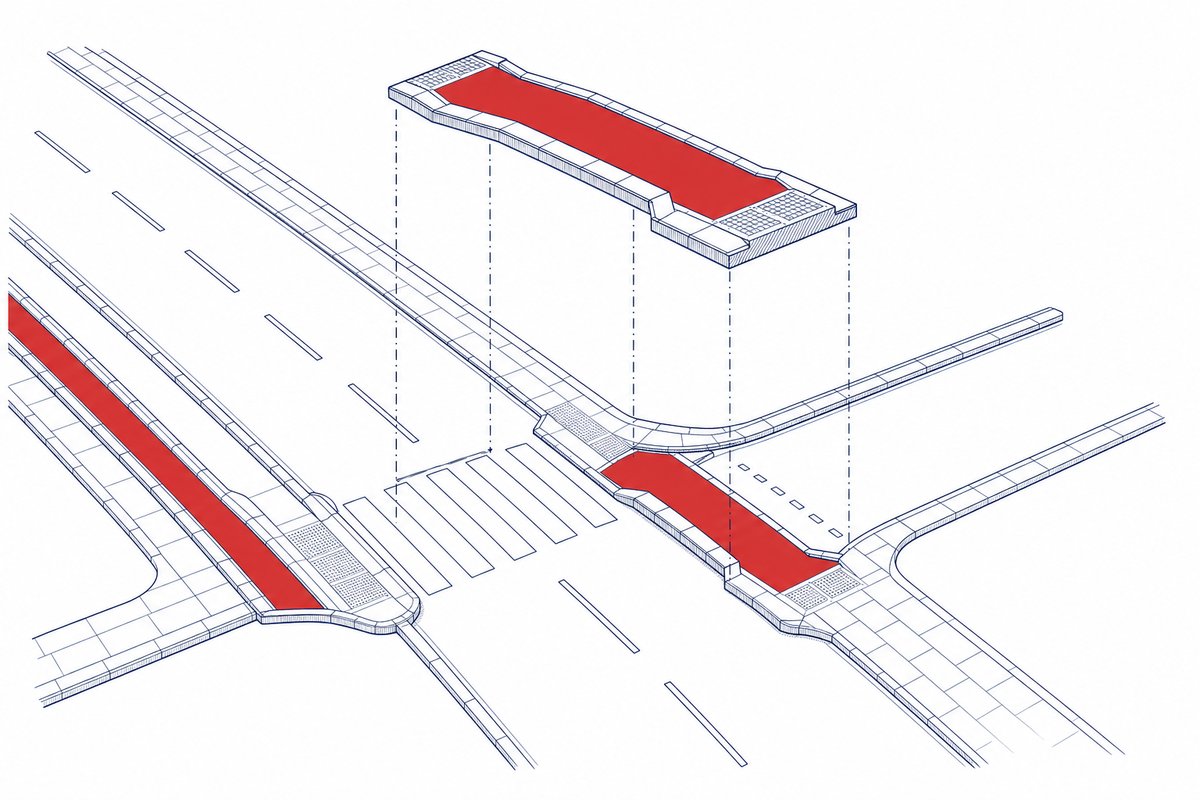
Councillors are not highway engineers. They rely on the Department for Transport to tell them what a safe road looks like. Since 27 July 2020, that standard is Local Transport Note 1/20. LTN 1/20 is the design standard councils in England work to. Its summary principles say cyclists must be physically separated and protected from high volume motor traffic, both at junctions and on the stretches of road between them.
Since 1 June 2023 Active Travel England has been a statutory consultee on large planning applications. It advises the planning authority on walking and cycling provision; it cannot direct the decision, but its advice is on the record.
Using evidence in a meeting
When you sit in a draughty community hall to look at display boards, raw anger will not change the drawings. Numbered points and references to the design guidance are easier for officers to act on. Look for the gap between the end of the new track and the start of the side road.
Write down the page number of the drawing and cite LTN 1/20 where the track merges with heavy motor traffic. Keep the health statistics in your back pocket to justify why the scheme matters, but use the engineering standards to fix the flaws. A polite, specific email sent well before the deadline carries more weight than anger at a display board. The campaign guides set out the consultation steps, and the conference papers list the 2012 seminar's speakers alongside other events. Read the plans. Send your numbered response before the closing date. Then go out and ride your bike.
Questions about the evidence
Q 8.1Does cycling to work make you live longer?
The data shows a strong link between cycle commuting and a longer life. The Celis-Morales study of the UK Biobank in 2017 found a 41 per cent lower risk of all cause mortality for people who ride to work. Both this study and the Copenhagen one are observational: they show an association, not proof of cause.
Q 8.2Is cycling dangerous in the UK?
It depends on how risk is measured. Malcolm Wardlaw's 2002 paper in Traffic Engineering and Control examined how to assess the actual risks cyclists face; per trip, per kilometre and per hour give different comparisons with other modes. Poor street layouts also make riding feel more dangerous than the figures alone suggest.
Q 8.3What evidence do councils listen to?
Local authorities follow national design standards and planning laws. They rely on LTN 1/20 to design tracks and junctions, and they listen to Active Travel England on large planning applications. They also pay attention to junction counts and specific, numbered responses to scheme drawings from local residents.
Q 8.4Are cycle helmets compulsory in the UK?
No, they are entirely optional. The Highway Code advises you to wear a helmet under Rule 59, but there is no law forcing you to do so. You have the right to ride bareheaded.