Reference · History
Cyclenation history: from the Cycle Campaign Network to a federation
Updated
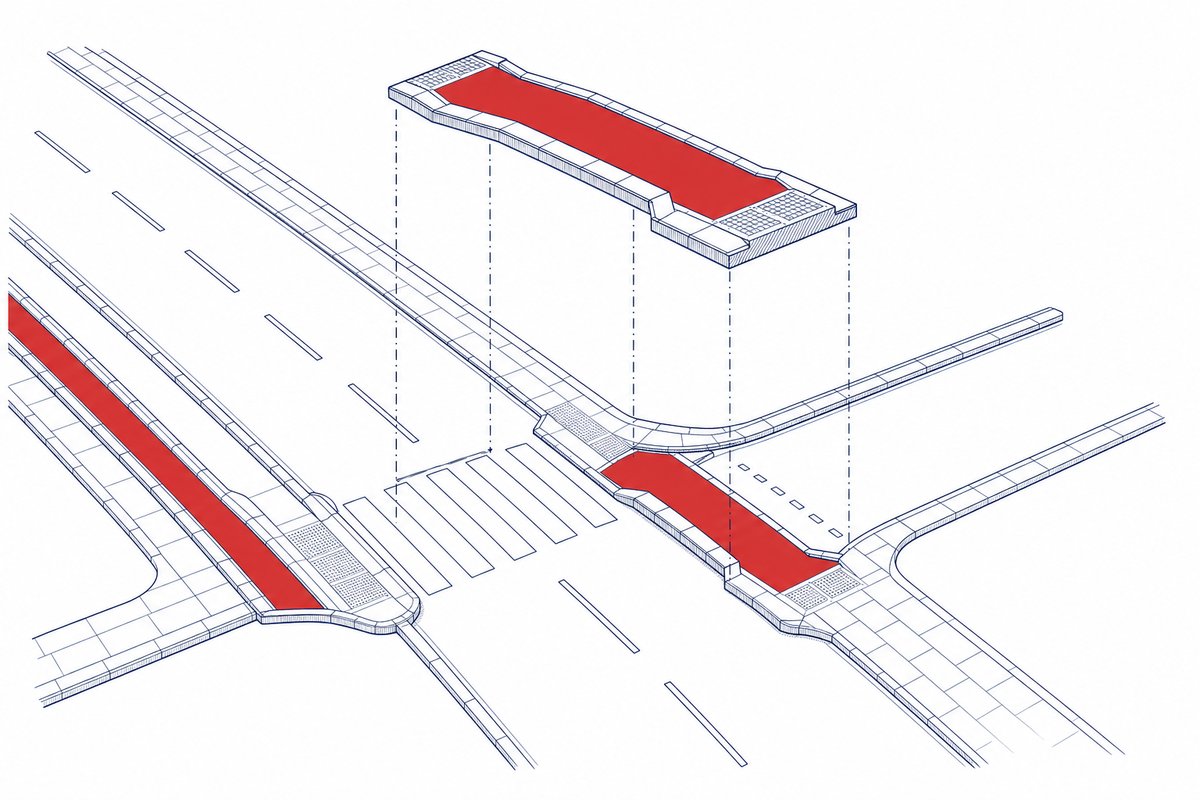
Sitting at a junction with a clipboard on a Tuesday morning teaches you how isolated a single street change can feel. You count the riders hopping the kerb to avoid a left hook from a delivery van. You log the numbers on the sheet. A standard consultation pack contains dozens of pages of generic traffic modelling, burying the single detailed drawing that actually shows the precise kerb lines for the new scheme. Reading these documents requires a specific kind of grim patience. You have to learn how to spot a missing tactile paving stone or a pinch point that will force a rider into primary position just as the traffic accelerates. You go home, pull the highway plans from the local authority portal, and type your objection before the midnight deadline. For years, local cycling advocacy felt exactly like this grinding process. The Cyclenation history is a record of what happened when those isolated volunteers started sharing their notes. Connecting the people who understood those junctions into a national block took decades of slow administrative effort. The work is slow.
Local groups first: the late 1970s onwards
Traffic grew steadily through the late 1970s. The streets became louder, vehicles became wider, and the physical margins for riding a bike shrank to the gutter. People who rode to work or to the shops began to form local groups in response to the changing road conditions. These groups started very small.
Friends of the Earth encouraged them and the Bicycle Association supported them. A group in one town might spend months arguing for a safe crossing over a ring road, completely unaware that a group two counties away had just won a similar argument. They had no way to share their consultation tactics.
The early campaigners had to learn how to read municipal blueprints from scratch.
The Cycle Campaign Network
As local groups multiplied, the need for a central exchange of information became obvious. Volunteers were wasting time solving problems that someone else had already cracked. The response was the creation of a national coordinating body, which became known as the Cycle Campaign Network.
The aim was to expand the web of local groups and share practical information across county lines. The organisation began publishing CCN News. CCN News ran from 1992 to 2008; its 96th issue appeared in September 2008.
On a junction plan, look first at the corner radii at side roads. A wide sweeping corner on the plan means cars will turn at speed without looking, while a tight corner means they have to slow down before crossing the junction mouth. The network allowed groups to share these specific technical details. They could warn each other about which highway engineering trends were actively dangerous.
This saved immense time.
From CCN to Cyclenation
The network formalised its existence in the middle of the 2000s. Company 05494843 was incorporated on 29 June 2005. It was set up initially as the Cycle Campaign Network, structured as a company limited by guarantee to provide a stable base for the work ahead.
By 2008 the organisation presented itself to the public under a new brand. It adopted the name Cyclenation, bringing a new look and a clearer set of aims for dealing with national bodies. The final issue of CCN News appeared in September 2008, replaced by Cyclenation News two months later.
The company officially changed its name to Cyclenation Ltd on 5 May 2011. It described itself clearly as the federation of UK cycling campaigners. It sat alongside British Cycling, the Bicycle Association, Sustrans and the CTC in the UK Cycling Alliance. It was a member of the European Cyclists' Federation. Cyclenation News reached issue 27 in May 2013, and later newsletters ran to March 2016.
Twice-yearly conferences and a joint conference with CTC
The real exchange of technical knowledge happened in person. The federation organised twice yearly conferences in the spring and the autumn. They moved around the country to different host cities, reflecting the geographic spread of the advocacy work.
The locations map out a tour of local cycling advocacy. Gatherings took place in Ryde and Chesterfield in 2001, Liverpool in 2002, Sheffield in 2003, Dublin in 2004, Godalming and Warrington in 2005, Oxford in 2007, Warrington in 2008 and Manchester in 2009. Spokes hosted the Edinburgh conference in November 2011, with more than a hundred delegates. Birmingham and Bristol followed in 2012, Leeds in October 2013, and London in November 2014, in Lambeth, hosted by London Cycling Campaign. Liverpool in October 2015 was a joint conference with CTC. The last three were St Albans in November 2016, Oxford in November 2017 and Birmingham in November 2018. The conference record has the details.
These weekends were built around sharing methods. At a conference, volunteers from different cities could sit in a room and agree on exactly how to photograph and document junction failures.
National campaigns in 2012 to 2014
The early 2010s saw the federation back major national efforts. Local junction fights are exhausting. National standards change the baseline rules for every junction at once. The federation backed Cities fit for cycling, the campaign The Times launched on 2 February 2012.
Parliamentary focus arrived when the All Party Parliamentary Cycling Group published its Get Britain Cycling report in April 2013. The national Space for Cycling website went live on 14 April 2014, asking for dedicated space on the streets, not just paint in the gutter. Making Space for Cycling, a guide to cycling in new developments produced with Cambridge Cycling Campaign (second edition 2014), gave local volunteers a document to quote when objecting to poor planning applications.
The later years
The flow of newsletters slowed as the 2010s progressed, with the final issues of Cyclenation News published in March 2016. AGMs were held in Birmingham on 27 April 2013 and 12 March 2016 (at the Birmingham and Midland Institute) and on 18 March 2017 at BikeExpo in Greater Manchester. CTC became Cycling UK on 5 April 2016. After the 2017 AGM the federation's news page was marked as no longer updated, and the last conference it listed was Birmingham in November 2018.
What remains on record
The formal company structure still exists on paper. A search of the Companies House register today shows Cyclenation Ltd as an active, non trading company. Its most recent accounts were made up to 31 December 2025.
The real legacy is not the company filing. It is the fact that local campaign groups no longer work in isolation. Groups that still meet today are listed in the directory of local groups.
Questions readers ask
Q 8.1What is the Cycle Campaign Network?
The Cycle Campaign Network was the original name of the federation of local cycle advocacy groups. It formed to share consultation tactics and technical blueprints across county lines.
Q 8.2When did the organisation become Cyclenation?
By 2008 the organisation presented itself as Cyclenation, and the registered company changed its name to Cyclenation Ltd on 5 May 2011.
Q 8.3Is Cyclenation Ltd still registered?
Yes, Companies House lists it as active and non-trading.
Q 8.4Where were the conferences held?
The host cities included Ryde, Chesterfield, Liverpool, Sheffield, Dublin, Edinburgh, Leeds, London, Oxford and Birmingham.